
Files
Download Full Text (777 KB)
Description
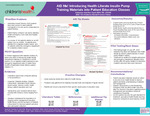
Practice Problem: Automated Insulin Delivery (AID) systems are insulin pumps that communicate with continuous glucose monitors to administer insulin at set intervals to alter one’s blood glucose to a preset target. AID systems have been proven to lower patients’ Hemoglobin A1Cs, but successful operation of the AID system can be complicated for patients and their families. This can lead to diabetes-related emergency room visits and hospital admissions. In a review of 164 patients started on an AID system over a period of six months, 27 patients visited the emergency department for a diabetes-related reason and 18 of those patients were admitted. To address this issue, an evidence-based practice project was designed using the PICOT question: In children diagnosed with diabetes mellitus (P), what is the effect of introducing health literate educational materials (I) compared to current practice (C) on diabetes related admissions and emergency department visits (O) within three months of automated insulin delivery system initiation (T). Literature/Evidence: A literature search utilizing EBSCO and OVID yielded twenty-three peer reviewed articles ranging from level I to level V of evidence. Key words for the search included diabetes mellitus, diabetic ketoacidosis, automated insulin delivery, insulin pumps, adverse events, patient education, cost and health literacy. Key findings include the importance of health literate education for proper self-management, the importance of ketone management teaching, and the importance of avoiding DKA readmissions for long term patient health outcomes as well as for cost reduction to the healthcare system. Practice Change(s): The practice change in this evidence-based practice project involved editing tip sheets provided in the insulin pump initiation training to be more health literate. The Flesch-Kincaid system rates readability from 0 (difficult to read) to 100 (very easy to read). Prior to the change, the patient education materials had a 41.5 Flesch Reading Ease score and were scored on the Flesch-Kincaid Grade Level at 10.0. These tip sheets will replace the current tip sheets handed out in an insulin pump initiation class. Implementation/Pilot Testing: Pilot testing of the new health literate patient educational materials began on 7/20/2026. Handouts were distributed to diabetes educators who will place the handouts in patient folders to take home from class. It is expected that preliminary results will be available on 11/20/2026. Outcomes/Results: The health literate patient education materials have a Flesch Reading Ease Score of 78.4 and a Flesch-Kincaid Grade Level of 4.9. This shows an improvement of 36.9 in the reading ease score and five grade levels. I expect a decrease in hospitalizations and/or emergency department utilization at the tips sheets now provide easily understood instructions for the prevention of ketosis due to pump malfunction. Recommendations/Conclusions: There is robust evidence to support making diabetes education materials health literate, especially information regarding ketone prevention and insulin pump management. Patients should receive consistent information and will need continued education support with their diabetes self-management throughout their lifetime. Clinicians should design tools that are easy for patients to understand.
Publication Date
10-12-2026
Disciplines
Pediatric Nursing
Recommended Citation
Hamilton Doyle, Katherine, "AID Me! Introducing Health Literate Insulin Pump Training Materials into Patient" (2026). EBP Fellowship. 21.
https://scholarlycollection.childrens.com/nursing-posters-tcuebp/21
Creative Commons License

This work is licensed under a Creative Commons Attribution-NonCommercial-No Derivative Works 4.0 International License.