

Files
Download Full Text (409 KB)
Description
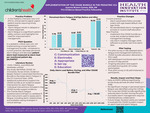
Practice Problem: Clinical alarms in the Pediatric Intensive Care Unit (PICU) are intended to indicate potentially life-threatening events requiring timely assessment. Excessive alarm frequency can contribute to alarm fatigue, resulting in delayed or missed responses and creating a significant patient safety concern that must be assessed in a timely manner. There is a need to address alarm management. [AT1.1] Literature Review: A literature search was conducted using OVID, Medline, and CINAHL. A quasi-experimental research study demonstrated the CEASE bundle as an effective nurse-led alarm management strategy. Multiple systematic reviews support several interventions included within the bundle. The literature review also identified the Charite Alarm Fatigue Questionnaire (CAFQa) as a validated 9-item instrument for measuring alarm fatigue, including alarm-related stress and coping behaviors in clinical settings.[AT2.1] Practice Change: Prior to implementation, the PICU lacked a standardized alarm management practice. Alarm parameters were based on age-specific default settings and were not consistently individualized to patient condition. The CEASE bundle, consisting of Communication, Electrodes, Appropriateness, Setup, and Education, was implemented to reduce nonactionable alarms through a structured, nurse-led approach. Implementation/Pilot Testing: A 5-Day CEASE bundle pilot was conducted in the PICU. A pre-pilot survey assessed alarm fatigue and alarm management behaviors among PICU nurses. Staff received CEASE bundle education through staff and unit-based council meetings. Alarm data was collected before, during, and after implementation using the Alarm Insights Manager (AIM) dashboard. A post-pilot survey was completed by participating nurses. Results: A Kruskal-Wallis test demonstrated a statistically significant decrease in daily alarm load across pilot periods (p=0.008). No statistically significant change was observed in perceived alarm fatigue as measured by the CAFQa. Recommendations/Conclusion: Implementation of the CEASE bundle significantly reduced alarm burden in the PICU. Future studies with longer implementation periods are recommended to evaluate the sustainability of alarm reduction and its impact on perceived alarm fatigue. [
Publication Date
10-14-2026
Disciplines
Pediatric Nursing
Recommended Citation
Brown-Gomez, Ayanna, "IMPLEMENTATION OF THE CEASE BUNDLE IN THE PEDIATRIC ICU" (2026). EBP Fellowship. 23.
https://scholarlycollection.childrens.com/nursing-posters-tcuebp/23
Creative Commons License

This work is licensed under a Creative Commons Attribution-NonCommercial-No Derivative Works 4.0 International License.