
Files
Download Full Text (759 KB)
Description
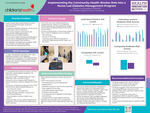
Practice Problem: Unmet social needs lead to poor outcomes in pediatric diabetes patients. While nurse-led interventions such as follow-up calls and care coordination can improve self-management of diabetes, social needs often extend beyond what nurses can directly provide. At the project facility, the diabetes management program historically has not included a community-based component, essential for addressing social determinants of health (SDOH). Notably, Community Health Workers (CHWs) play a crucial role in addressing health disparities through community-based interventions. To examine this practice gap, the following PICOT question was developed: In high-risk pediatric patients with Type 1 diabetes (T1D) enrolled in the diabetes management program, will implementing a CHW role, compared to current practice, impact A1C levels or diabetes risk scores, within 6 months? Literature/Evidence: A comprehensive literature search of Ovid Discovery and PubMed resulted in 25 relevant articles, including randomized control trials and systemic reviews. The keywords used included high risk T1D, home visits, and CHW. Using the Johns Hopkins EBP Model for levels of evidence, the articles ranged from level 1 to 5. The literature consistently supports that CHW interventions demonstrate efficacy in lowering A1C and improving self-management. In addition, CHWs bridge the gap between medical and community services, while helping to navigate the complex health care system. CHWs provide crucial support beyond the traditional clinical setting and play a key role in addressing SDOH barriers that can adversely affect diabetes care in children. Practice Change(s): The CHW role was implemented as a supplementary resource to traditional clinical setting, conduct home visits, provide additional insight, and a better understanding of the home environment. Nurses incorporated a mentoring model to train CHWs in diabetes care, including role playing and hands on training. Implementation/Pilot Testing: A home visit is completed for each patient. CHW interventions include a comprehensive home assessment, assessment of SDOH, facilitating access to community resources, and providing peer support to families. In addition, CHWs offer culturally tailored education, problem solving and troubleshooting of diabetes technology, goal setting, and caregiver/child responsibility sharing. Patients are provided with a medication bag as a resource for assembling a sick day kit. Outcomes/Results: Among 14 patients who have completed a home visit, mean A1C decreased from 11.77% to 10.12% (mean change −1.65%, t(13) = 2.76, p = 0.016), paired t-test analysis demonstrated a statistically significant improvement in glycemic control. Among 10 patients with available diabetes risk scores, the mean scores decreased from 37.49 to 30.93 (mean change −6.56 points, t(9) = 1.03, p = 0.332). While not statistically significant, the reduction suggests a clinically significant trend supporting the intervention. Recommendations/Conclusions: Findings support the use of CHWs to conduct home visits in this patient population to reduce A1C levels. CHW interventions have not yet significantly reduced overall diabetes risk scores, which gives an opportunity for improvement. Limitations include small sample size and short time frame given project remains in pilot phase. Indeed, pediatric nurses play a key role in integrating CHWs to identify health disparities, address SDOH, and bridge gaps in care. Future plans will elaborate on quality-of-life scores.
Publication Date
10-15-2026
Disciplines
Pediatric Nursing
Recommended Citation
Cruz Escalante, Blanca, "Implementing the Community Health Worker Role Into a Nurse-Led Diabetes Management Program" (2026). EBP Fellowship. 24.
https://scholarlycollection.childrens.com/nursing-posters-tcuebp/24
Creative Commons License

This work is licensed under a Creative Commons Attribution-NonCommercial-No Derivative Works 4.0 International License.