

Files
Download Full Text (625 KB)
Description
INNOVATION & LEADERSHIP
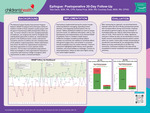
Background: The NSQIP-P Surgical Clinical Reviewers (SCR) of Children’s Health of Texas initiated a quality project with the goal of maintaining an 80% postoperative follow-up rate. To remain relevant in the ever-changing landscape of healthcare, we recognize the need for thoughtful and individualized approaches to follow-up. Unprecedented growth in the healthcare sector creates a demand for innovative solutions to address the ever-changing needs of the pediatric surgical population. Patient expectations have driven the desire for organizational transparency and robust approaches to ensure optimal, holistic outcomes. This has been accomplished using tailored follow-up strategies to meet organizational requisites in conjunction with American College of Surgeons requirements to obtain a Semiannual Report.
Implementation: Interventions implemented during this project include enhancing MyChart messaging, expanding contact attempts, and integrating CareEverywhere into our process. Tableau dashboard enabled us to analyze real-time trends. For additional information, refer to, The Development and Implementation of On-Demand NSQIP Visualization Tools in a Pediatric Health System. Ineffective strategies included providing callback numbers via voicemail, the inability to coordinate efforts with general surgery clinic, and variation in successful socially acceptable hours for contact attempts. A barriers assessment highlighted health literacy, hectic guardian schedules, and school holidays as challenges. Contrary to initial expectations, follow-up rates were higher among non-native English speakers.
Evaluation: After reassessing our approach, we prioritized phone attempts within the 30-to-90-day postoperative period with increased efforts during school breaks. Emphasis was placed on general surgery, the top contender of incomplete follow ups. Data for 2024 shows follow up rates of 73.9% - Plano and 83.1%- Dallas. Significant contrasts in follow-up rates can be attributed to chronic health concerns necessitating extensive patient contact within our system. Future steps include incorporating an introduction and rationale for our postoperative 30-day follow-up surveys automatically on all After Visit Summaries. Continuous tracking of this data will be completed to monitor compliance and improve patient outcomes.
Publication Date
11-24-2025
Disciplines
Pediatric Nursing
Recommended Citation
Davis, Tess; Price, Karisa; and Russ, Courtney, "Epilogue: Postoperative 30-Day Follow-Up" (2025). 2025. 21.
https://scholarlycollection.childrens.com/nursing-anf2025/21
Creative Commons License

This work is licensed under a Creative Commons Attribution-NonCommercial-No Derivative Works 4.0 International License.