
Files
Download Full Text (470 KB)
Description
INNOVATION & LEADERSHIP
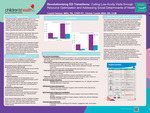
Background: Frequent emergency department (ED) visits for non-emergent issues contribute to overcrowding, strain healthcare resources, and raise costs for families and the system. Many of these low-acuity visits—non-urgent cases manageable in primary care—worsen ED congestion and delay care for critical patients. A major factor is caregivers’ lack of awareness about alternatives like primary care, urgent care, and telemedicine. This leads to unnecessary ED use and further system strain. To address this, a family-centered care coordination program was created to reduce low-acuity ED visits by tackling care barriers, offering illness-specific education, and providing ongoing RN-led caregiver support. The program aims to improve healthcare efficiency by guiding caregivers to appropriate care settings and offering continuous support.
Implementation: The program is led by registered nurses who conduct transition-of-care outreach to assess barriers, educate caregivers on appropriate care settings, and provide support. Following initial contact, families receive a personalized call plan and welcome packet with key resources, including PCP and urgent care contact details, nurse advice line, mobile app, poison control, Medicaid transport, and patient portal access. An ED vs. urgent care flyer supports informed decision-making. Ongoing education emphasizes when to use urgent care, telemedicine, PCPs, and 24/7 nurse helplines, along with insurance benefit guidance to encourage cost-effective choices. Follow-up outreach is initiated for repeat low-acuity ED visits to reinforce education and address unresolved barriers.
Evaluation: Program implementation demonstrated strong outcomes in reducing low-acuity ED utilization. Engaged patients experienced a 79% reduction in ED visits, while non-engaged patients saw a 69% reduction, highlighting the impact of timely engagement and RN-led care coordination. The program improved healthcare efficiency by optimizing resource use and addressing social determinants of health (SDOH). Culturally competent care coordinators played a critical role in identifying root causes of ED overuse and tailoring interventions to meet the needs of diverse populations. Strategies such as improving access to primary and urgent care, enhancing caregiver education, and connecting families with community resources contributed to sustained reductions in ED reliance. These findings support the value of family-centered care coordination in promoting appropriate care utilization and advancing health equity.
Publication Date
11-24-2025
Disciplines
Pediatric Nursing
Recommended Citation
Salazar, Crystal and Combs, Christa, "Revolutionizing ED Transitions: Cutting Low-Acuity Visits through Resource Optimization and Addressing Social Determinants of Health" (2025). 2025. 40.
https://scholarlycollection.childrens.com/nursing-anf2025/40
Creative Commons License

This work is licensed under a Creative Commons Attribution-NonCommercial-No Derivative Works 4.0 International License.