

Files
Download Full Text (528 KB)
Description
INNOVATION & LEADERSHIP
Background: Social Determinants of Health (SDOH) can gravely impact patient recovery. Health organizations should prioritize identifying high-risk SDOH patients to improve patient outcomes. Current research suggests SDOH screening should be standard practice in preventative care. With this awareness, healthcare team members must identify patients with complex social determinants of health needs to ensure essential resources are offered to enhance their healing process during hospitalization and sustain it post-discharge. The most straightforward approach to identifying patients from diverse backgrounds with SDOH requirements is via SDOH screening. The collaborating health system, serving a diverse pediatric population in the northern Texas region, reported a low screening compliance rate of 54% during the initial implementation in February 2024. The Acute Care Department's objective was to improve the screening rate to 85% within a six-month timeframe.
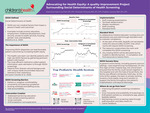
Implementation: In July 2025, crowd-sourced feedback identified barriers such as staff comprehension and familiarity with the screening process, navigation of electronic health records, and a family's openness to transparency. To enhance screening compliance from the baseline of 59% to the target of 85%, bedside staff and leadership educational workgroup created and deployed a screening barrier tip sheet. In August 2024, the "tip sheet" was disseminated during staff meetings, leader-staff rounding, and weekly newsletter. It had descriptive verbiage for bedside staff to use when describing the screening to families, along with different ways to complete it, such as conversing, using a tablet, or using MyChart, to name a few. Following the implementation of the tip sheet, screening percentages increased to >90% in December 2024. A collaboration between nursing staff and health unit coordinators was implemented to maintain compliance percentages, resulting in a 96% compliance rate as of May 2025.
Evaluation: Patients who previously had unmet needs now have access to services like stable housing as screening percentages rise. Moreover, patients from diverse backgrounds with unique needs receive resources tailored to their experiences. To further the development of the SDOH screening tool, it is essential to implement screenings in more patient care settings, such as the emergency department, and to establish a notification system for patients and caregivers to complete the screening. Utilizing an SDOH screening tool enables nurses to enhance health equality, thus creating a foundation for access to high-quality care.
Publication Date
11-24-2025
Disciplines
Pediatric Nursing
Recommended Citation
Dela Cruz, Rose Anne; Marquez, Amanda; and Lemmons, Madison, "Advocating for Health Equity: A quality Improvement Project Surrounding Social Determinants of Health Screening" (2025). 2025. 6.
https://scholarlycollection.childrens.com/nursing-anf2025/6
Creative Commons License

This work is licensed under a Creative Commons Attribution-NonCommercial-No Derivative Works 4.0 International License.