
Files
Download Full Text (740 KB)
Description
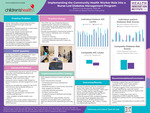
Lit Review: A comprehensive literature search of Ovid Discovery and PubMed resulted in 25 relevant articles, including randomized control trials and systemic reviews. The keywords used included high risk T1D, home visits, and CHW. Using the Johns Hopkins EBP Model for levels of evidence, the articles ranged from level 1 to 5. The literature consistently supports that CHW interventions demonstrate efficacy in lowering A1C and improving self-management. In addition, CHWs bridge the gap between medical and community services, while helping to navigate the complex health care system. CHWs provide crucial support beyond the traditional clinical setting and play a key role in addressing SDOH barriers that can adversely affect diabetes care in children. PICO: In high-risk pediatric patients with Type 1 diabetes (T1D) enrolled in the diabetes management program, will implementing a CHW role, compared to current practice, impact A1C levels or diabetes risk scores, within 6 months? Results: Among 14 patients who have completed a home visit, mean A1C decreased from 11.77% to 10.12% (mean change −1.65%, t(13) = 2.76, p = 0.016), paired t-test analysis demonstrated a statistically significant improvement in glycemic control. Among 10 patients with available diabetes risk scores, the mean scores decreased from 37.49 to 30.93 (mean change −6.56 points, t(9) = 1.03, p = 0.332). While not statistically significant, the reduction suggests a clinically significant trend supporting the intervention.
Publication Date
11-9-2026
Keywords
Pediatric nursing
Recommended Citation
Cruz Escalante, Blanca, "Implementing the Community Health Worker Role Into a Nurse-Led Diabetes Management Program" (2026). 2026. 11.
https://scholarlycollection.childrens.com/nursing-anf2026/11
Creative Commons License

This work is licensed under a Creative Commons Attribution-NonCommercial-No Derivative Works 4.0 International License.