
Files
Download Full Text (430 KB)
Description
QUALITY IMPROVEMENT
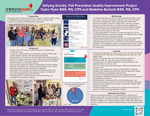
Background: In March of 2025, an increase in inpatient falls led to a hospital-wide containment period. In response, a fall prevention nurse role was created to identify gaps, provide targeted education and lead improvement efforts. Initial surveys of 101 nurses revealed that while 91% reported using the teach-back method of education as part of their practice with patients and families, only 36.6% reported they always use this method, and just 19.8% reported feeling very comfortable doing so. Direct observations revealed families unable to teach-back fall prevention strategies despite nurse documentation of education completion. A gap analysis also revealed inconsistent understanding of hourly rounding practices—39% of 101 nurses said they performed hourly rounding and prioritized individualized risk education strategies. This highlighted the need for education tools, staff training, and centralized communication strategies.
Methodology: To address these gaps, the fall prevention team partnered with a teach-back expert to become champions. Educational materials were utilized, developed and distributed in response to feedback. Interactive “Safety Sips” in-services, including games and real-time role-play, were held to increase engagement. Of 287 nurses surveyed, 79% attended in-services, and 94% of the 241 observed afterward demonstrated correct use of teach-back. To clarify expectations for rounding, the team developed the “5P’s of Purposeful Rounding,” a mnemonic integrated into staff education, posted in unit work areas, and discussed in huddles. Additionally, a laminated “My Fall Safety Plan” is currently being piloted on several units. This tool is in patient rooms and updated collaboratively by nursing, PCTs, and PT/OT to reflect customized safety strategies. The tool supports patient- and family-centered care by creating a shared, visual plan that is reviewed each shift and updated throughout the hospital stay.
Outcomes: Throughout implementation on various ACS units, the monthly hospital-wide fall with injury rate per 1,000 inpatient days decreased from 0.62 (March) to 0.32 (August). Of the 241 nurses observed post- implementation, 94% demonstrated correct teach-back use. Caregiver understanding also improved: 91% (159/175) of families surveyed at the bedside reported that the “My Fall Safety Plan” helped them understand and participate in fall prevention. Purposeful rounding practices were formally integrated into Epic documentation, ensuring sustainability and promoting real-time visibility of individualized interventions. The fall prevention RN role has proven successful and is projected to expand to additional hospital-acquired conditions. Educational tools, including the 5P’s and the fall safety plan, have become part of nursing practice across Acute Care Services, supporting sustained culture change and improving communication between staff, patients, and families.
Publication Date
11-24-2025
Disciplines
Pediatric Nursing
Recommended Citation
Ryan, Taylor and Bartush, Madeline, "Defying Gravity: Fall Prevention Quality Improvement Project" (2025). 2025. 14.
https://scholarlycollection.childrens.com/nursing-anf2025/14
Creative Commons License

This work is licensed under a Creative Commons Attribution-NonCommercial-No Derivative Works 4.0 International License.