
Files
Download Full Text (378 KB)
Description
QUALITY IMPROVEMENT
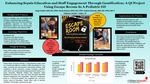
Background: Sepsis is a leading cause of morbidity and mortality in hospitals, making early recognition and intervention critical. Traditional education methods often fail to ensure retention of essential knowledge, leaving staff underprepared. To address this gap, a Quality Improvement (QI) project was launched in the Emergency Department (ED) of an urban Level 1 Pediatric Trauma Center. Nursing leaders identified the need for engaging, sustainable education and collaborated with educators to design an escape room training activity. The aim was to evaluate whether gamification could increase engagement, improve understanding of a new sepsis screening tool, and enhance overall sepsis awareness among ED staff.
Methodology: Using the plan-do-study-act (PDSA) framework, an interactive escape room was developed during Sepsis Awareness Month. Staff teams worked through a septic shock case within a 30-minute time limit, advancing by solving puzzles at stations featuring games such as Jenga, Operation, and a Magnetic Fishing Game. Each challenge reinforced use of sepsis algorithms, order sets, and clinical pathways. Rules and objectives were clearly defined, and a competitive element, a prize for the fastest team, encouraged motivation. After completing the escape room, participants engaged in structured debriefings to consolidate learning and provide feedback. To measure effectiveness, staff completed pre- and post-evaluations using an eight-question, five-point Likert-type scale, assessing knowledge, confidence, and application of the sepsis tool and guidelines.
Outcomes: Fifty-seven participants completed the pre-survey, and 47 completed the post-survey. Results showed statistically significant improvements in multiple domains. Comfort using the new sepsis tool increased from 75% to 98% (p = 0.001), understanding of the order set rose from 83% to 96% (p = 0.018), confidence in documentation improved from 77% to 98% (p = 0.001), and recognition of early sepsis signs increased from 90% to 98% (p = 0.044). Participant feedback was overwhelmingly positive, with comments highlighting enjoyment, teamwork, and practical application of knowledge. Overall, the escape room format enhanced engagement, promoted collaboration, and supported long-term knowledge retention, demonstrating its value as an innovative educational tool in clinical practice.
Publication Date
11-24-2025
Disciplines
Pediatric Nursing
Recommended Citation
Rodick, Angie; Bizzack, Nicole; and Elizondo, Virginia, "Enhancing Sepsis Education and Staff Engagement Through Gamification: A QI Project Using Escape Rooms In A Pediatric ED" (2025). 2025. 20.
https://scholarlycollection.childrens.com/nursing-anf2025/20
Creative Commons License

This work is licensed under a Creative Commons Attribution-NonCommercial-No Derivative Works 4.0 International License.