

Files
Download Full Text (548 KB)
Description
QUALITY IMPROVEMENT
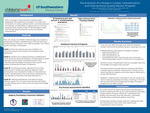
Background: With a change in leadership, substantial increases in the number and complexity of cardiac catheterization and interventional procedures, we identified an opportunity for a formal programmatic quality review to identify potential gaps in data and missed opportunities for quality improvement.
Methodology: Plan, Do, Study, Act (PDSA) methodology was utilized to develop the Cardiac Catheterization and Interventional Quality Review Program. Over the course of 2021 to present, four cycles of the PDSA process have been completed. Cycle I: Action focused on accuracy validation of outcomes reports and initiation of a programmatic dashboard. Cycle II: Initiation of a meeting lead by a collaborative nurse-physician dyad, to facilitate a multidisciplinary team approach toward review of adverse events while maintaining knowledge of programmatic growth and quality improvement project completion. Cycle III: Tracking parameter adjustments of major adverse event trends and research team participation initiated for review of interventional studies, related events, and study status. Meeting time adjusted to facilitate improved attendance. Cycle IV: Meeting attendance and research study initiations goals met. Process improvements identified through adverse event review and outcomes knowledge obtained.
Outcomes: From 2021 through present, 30 Pediatric Cardiac Interventional Quality Review meetings occurred. Multidisciplinary participation steadily increased (2022:12/13 people average, 2023:17 people average, 2024:20 people average). The Multidisciplinary team is comprised of Cath lab staff, Interventionalists, Electrophysiologists, research coordinators, & management personnel. The Interventional Quality Review meetings identified multiple opportunities for improvement. Key process improvements include Preemie Duct Occlusion Program, Adverse Event trend monitoring, and Research in Interventional Cardiology. Accurate outcomes reporting and early identification of trends in adverse events via our Interventional Cardiology Quality Review Program allows for multidisciplinary quality improvement and risk reduction, ultimately contributing to optimized patient outcomes. Increasingly complex cardiac patients, undergoing high-risk interventions with lower-than-benchmark complications was achieved.
Publication Date
11-24-2025
Disciplines
Pediatric Nursing
Recommended Citation
Roberts, Susanne; Torzone, Andrea; and Reddy, Surendranath Veeram, "The Evolution of a Pediatric Cardiac Catheterization and Interventional Quality Review Program" (2025). 2025. 43.
https://scholarlycollection.childrens.com/nursing-anf2025/43
Creative Commons License

This work is licensed under a Creative Commons Attribution-NonCommercial-No Derivative Works 4.0 International License.