
Files
Download Full Text (262 KB)
Description
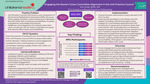
Practice Problem: In this multi-site hospital system, unit committees were meeting outside of the Unit Practice Council (UPC) but were not consistently returning to the council to share information, request input, or seek decisions. This created a disconnect between committee work and nursing priorities. To address this problem, an evidence-based practice project was initiated using the PICO(T) question: Does the practice of having all unit committees report to their Unit Practice Council (UPC) to share information and for decision-making improve nurse engagement compared to the current practice of multiple committees meeting outside of their UPC within a three-month pilot period? Literature/Evidence: A comprehensive literature search used Library Services and OVID synthesis to search CINAHL and PubMed databases with the key terms: nursing professional governance, unit practice council, shared governance, unit-based council and engagement. Nursing Professional Governance (NPG) literature supports the UPC as the unit's decision-making body for nursing practice, quality, competence, and knowledge. Evidence also supports strengthening communication, frontline nurse participation, and accountability for unit-based practice changes through governance structures. Best practice indicates that committees should inform the UPC, bring forward concerns, seek input from council members, and return for decisions that fall within their authority. Practice Change(s): After gaining approval from unit leadership, the Cardiac Intensive Care Unit (CICU) was selected as the focus of this work due to its overall size, established UPC, and existing committee structure. A pilot was implemented to align unit committees through the UPC. During monthly UPC meetings, each committee utilized a template to provide a 90-second report. These reports included the top three strengths and weaknesses identified during the previous month, requests for input from UPC members, and discussion of issues requiring council feedback or decisions requiring approval. Implementation/Pilot Testing: Zoom training for the pilot was provided to the managers, UPC leaders, and the chairs of the four committees operating outside the UPC. A script was provided for the chairs. A survey was created to measure nurse engagement. Pre-intervention surveys (n=156) yielded a response rate of approximately 19%. The pilot ran for three months, with committee representatives providing monthly UPC updates using the standardized reporting format. The post-intervention response rate was 9%. Outcomes/Results: An independent-samples t-test was conducted to compare pre- and post-survey responses. Nurse engagement scores improved following the intervention, with statistically significant increases in nurses' perceived involvement in nursing practice decisions and willingness to submit practice-improvement ideas to the UPC. Perceptions that the UPC made decisions that positively impacted practice improved. The results showed that nurses who participated in NPG activities had significantly higher overall engagement scores. Significant improvements were observed in understanding the role of the UPC, willingness to propose practice-improvement ideas, and accountability for nursing practice. Recommendations/Conclusions: Aligning committees through the UPC improved communication, increased visibility of committee work and strengthened nurse engagement in the CICU. This project supports the UPC as the decision-making body for nursing practice. Continued intentional committee alignment with UPCs and greater communication with all nurses are crucial for increasing engagement in decision-making and enculturating NPG throughout the organization.
Publication Date
10-13-2026
Disciplines
Pediatric Nursing
Recommended Citation
Noel, Kris, "Engaging the Nurse’s Voice: Committee Alignment in the Unit Practice Council" (2026). EBP Fellowship. 22.
https://scholarlycollection.childrens.com/nursing-posters-tcuebp/22
Creative Commons License

This work is licensed under a Creative Commons Attribution-NonCommercial-No Derivative Works 4.0 International License.