
-
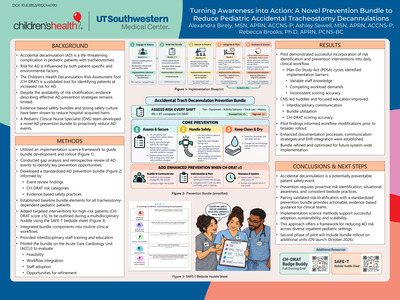
Turning Awareness into Action - A Novel Prevention Bundle to Reduce Pediatric Accidental Tracheostomy Decannulations
Alexandra Birely, Ashley Sewell, and Rebecca Brooks
-
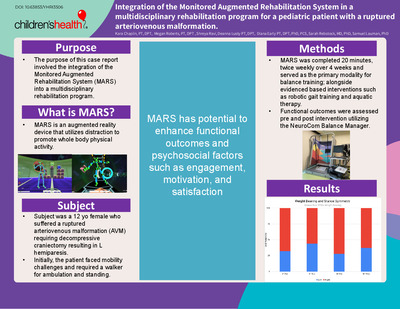
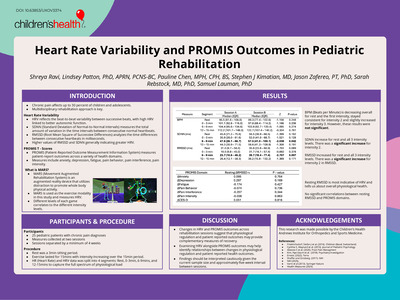
Integration of the Monitored Augmented Rehabilitation System
Kara Chaplin, Megan Roberts, Shreya Ravi, Deanna Lusty, Diana Early, Sarah Rebstock, and Samuel Lauman
-
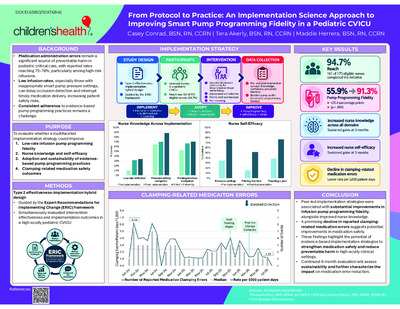
From Protocol to Practice: An Implementation Science Approach to Improving Smart Pump Programming Fidelity in a Pediatric CVICU
Casey Conrad, Tera Akerly, and Maddie Herrera
-
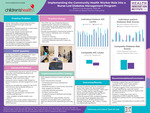
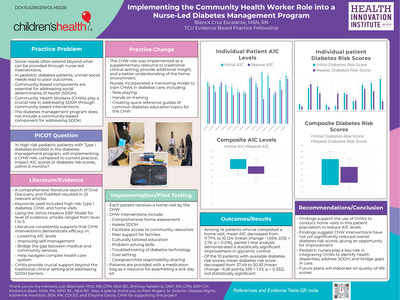
Implementing the Community Health Worker Role Into a Nurse-Led Diabetes Management Program
Blanca Cruz Escalante
Lit Review: A comprehensive literature search of Ovid Discovery and PubMed resulted in 25 relevant articles, including randomized control trials and systemic reviews. The keywords used included high risk T1D, home visits, and CHW. Using the Johns Hopkins EBP Model for levels of evidence, the articles ranged from level 1 to 5. The literature consistently supports that CHW interventions demonstrate efficacy in lowering A1C and improving self-management. In addition, CHWs bridge the gap between medical and community services, while helping to navigate the complex health care system. CHWs provide crucial support beyond the traditional clinical setting and play a key role in addressing SDOH barriers that can adversely affect diabetes care in children. PICO: In high-risk pediatric patients with Type 1 diabetes (T1D) enrolled in the diabetes management program, will implementing a CHW role, compared to current practice, impact A1C levels or diabetes risk scores, within 6 months? Results: Among 14 patients who have completed a home visit, mean A1C decreased from 11.77% to 10.12% (mean change −1.65%, t(13) = 2.76, p = 0.016), paired t-test analysis demonstrated a statistically significant improvement in glycemic control. Among 10 patients with available diabetes risk scores, the mean scores decreased from 37.49 to 30.93 (mean change −6.56 points, t(9) = 1.03, p = 0.332). While not statistically significant, the reduction suggests a clinically significant trend supporting the intervention.
-
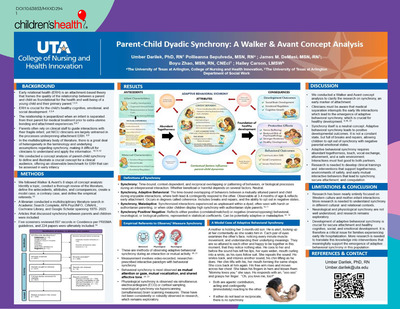
Parent-Child Dyadic Synchrony: A Walker & Avant Concept Analysis
Umber Darilek, Pollieanna Sepulveda, James DeMasi, Boyu Zhao, and Hailey Carson
-
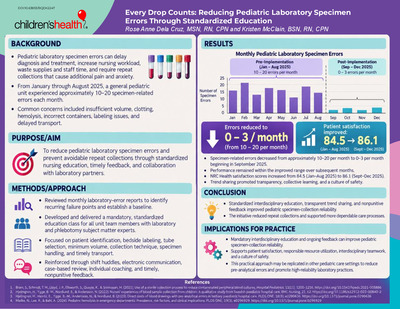
Every Drop Counts: Reducing Pediatric Laboratory Specimen Errors Through Standardized Education
Rose Anne Dela Cruz, and Kristen McClain
-
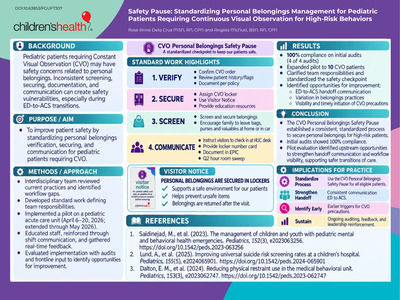
Safety Pause: Standardizing Personal Belongings Management for Pediatric Patients Requiring CVO for High-Risk Behaviors
Rose Anne Dela Cruz, and Angela McNutt
-
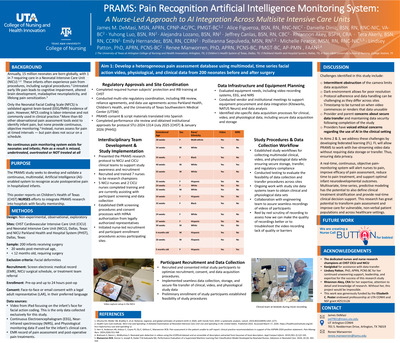
PRAMS: Pain Recognition Artificial Intelligence Monitoring System
James DeMasi, Alice Figuero, Danielle Diniz, Yuhong Luo, Alejandra Lozano, effrey Canlas, Rhiannon Akey, Tera Akerly, Emily Hernandez, Pollieanna Sepulveda, Michelle Pearce, Lindsey Patton, and Renee Manworren
-
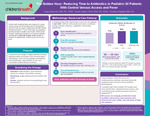
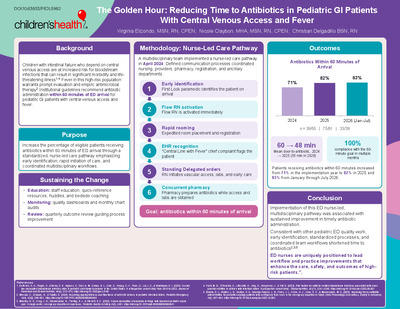
The Golden Hour: Reducing Time to Antibiotics in Pediatric GI Patients With Central Venous Access and Fever
Virginia Elizondo,; Nicole Claybon,; and Christian Delgadill
-
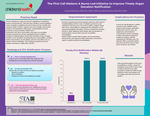
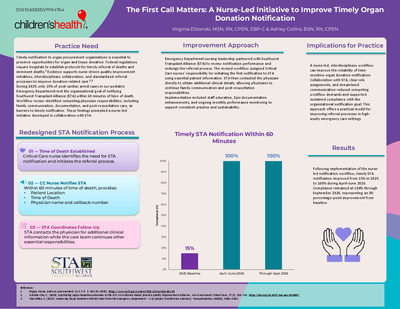
The First Call Matters: A Nurse-Led Initiative to Improve Timely Organ Donation Notification
Virginia Elizondo, and Ashley Collins
-
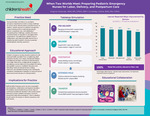
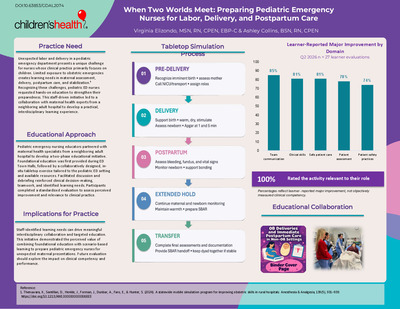
When Two Worlds Meet - Preparing Pediatric Emergency Nurses for Labor, Delivery, and Postpartum Care
Virginia Elizondo and Ashley Collins
-
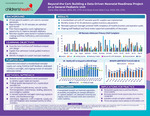
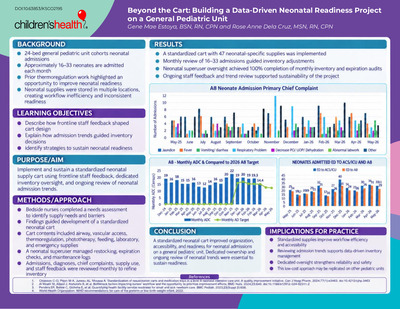
Beyond the Cart: Building a Data-Driven Neonatal Readiness Project on a General Pediatric Unit
Gene May Estoya, and Rose Anne Dela Cruz
-
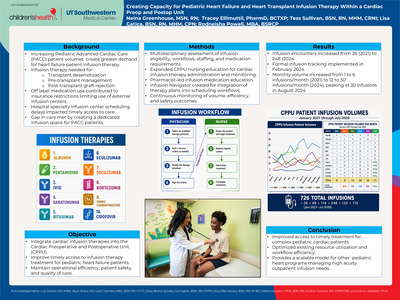
Creating Capacity for Pediatric Heart Failure and Heart Transplant Infusion Therapy Within a Cardiac Preop and Postop Uni
Neina Greenhouse,; Tracey Ellimuttil,; Tess Sullivan,; and Lisa Gatica,
-
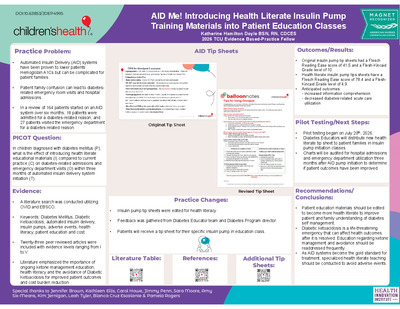
AID Me! Introducing Health Literate Insulin Pump Training Materials into Patient
Katherine Hamilton
Lit Review: A literature search utilizing EBSCO and OVID yielded twenty-three peer reviewed articles ranging from level I to level V of evidence. Key words for the search included diabetes mellitus, diabetic ketoacidosis, automated insulin delivery, insulin pumps, adverse events, patient education, cost and health literacy. Key findings include the importance of health literate education for proper self-management, the importance of ketone management teaching, and the importance of avoiding DKA readmissions for long term patient health outcomes as well as for cost reduction to the healthcare system. PICO: In children diagnosed with diabetes mellitus (P), what is the effect of introducing health literate educational materials (I) compared to current practice (C) on diabetes-related admissions and emergency department visits (O) within three months of automated insulin delivery system initiation (T). Results: The health literate patient education materials have a Flesch Reading Ease Score of 78.4 and a Flesch-Kincaid Grade Level of 4.9. This shows an improvement of 36.9 in the reading ease score and five grade levels. I expect a decrease in hospitalizations and/or emergency department utilization at the tips sheets now provide easily understood instructions for the prevention of ketosis due to pump malfunction.
-
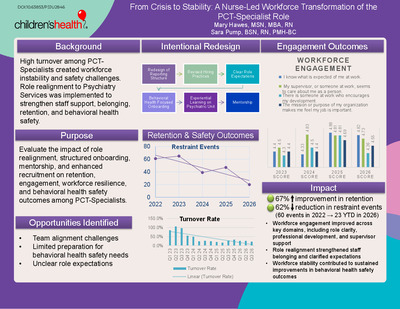
From Crisis to Stability - A Nurse-Led Workforce Transformation of the PCT-Specialist Role
Mary Hawes and Sara Pump
-
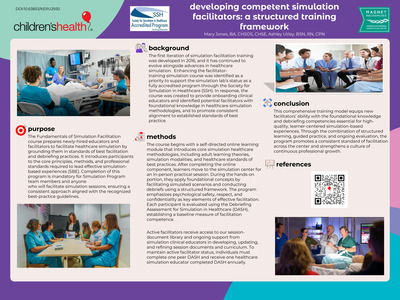
Developing Competent Simulation Facilitators: A Structured Training Framework
Mary Jones Jones, and Ashley Utley
-
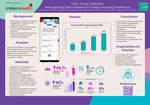
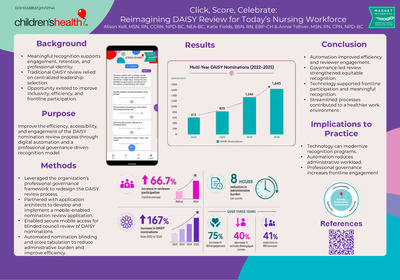
Click, Score, Celebrate - Reimagining DAISY Review for Today’s Nursing Workforce
Alison Kell, Katie Fields, and Annie Tolliver
-
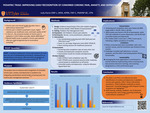
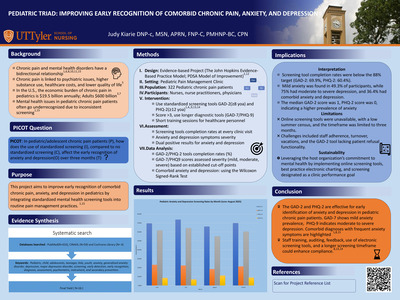
PEDIATRIC TRIAD - IMPROVING EARLY RECOGNITION OF COMORBID CHRONIC PAIN, ANXIETY, AND DEPRESSION
Judy Kiarie Kiarie
Lit Review: A systematic literature review identified 16 studies supporting the use of standardized screening to enhance early detection of anxiety and depression in pediatric chronic pain populations. Methods: This evidence-based initiative was conducted at a pediatric pain management clinic within a teaching hospital, using the Johns Hopkins Evidence-Based Practice Model and the Plan-Do-Study-Act (PDSA) Model. The project aimed to improve early identification of chronic pain, anxiety, and depression by integrating screening tools: Generalized Anxiety Disorder–2 (GAD-2) for patients aged 8 and older and the Patient Health Questionnaire–2 (PHQ-2) for those aged 12 and older. In three months, 322 patients were screened, and those who scored 3 or higher underwent further evaluation using the GAD-7 and PHQ-9. The analysis focused on screening completion rates, symptom severity, comorbidity, and alignment with established cut-off points. PICO: In pediatric and adolescent patients with chronic pain (P), how does standardized mental health screening (I), compared to no standardized screening (C), affect early identification of anxiety and depression (O) over three months (T)? Results: Screening rates improved to 69.9% for anxiety and 60.4% for depression but remained below the 88% benchmark. The majority of participants were female (69.9%), with 28% identifying as Hispanic. A significant percentage reported mild to moderate anxiety and moderate to severe symptoms of depression. There was a 36.4% increase in dual-positive screenings, indicating improved detection. Statistical analysis showed a median GAD-2 score of 1 and a PHQ-2 score of 0, underscoring the need for targeted interventions.
-
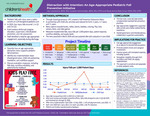
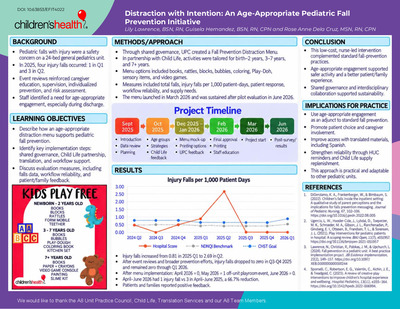
Distraction with Intention: An Age-Appropriate Pediatric Fall Prevention Initiative
Lily Lawrence,; Guisela Hernandez,; and Rose Anne Dela Cruz
-
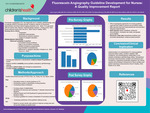
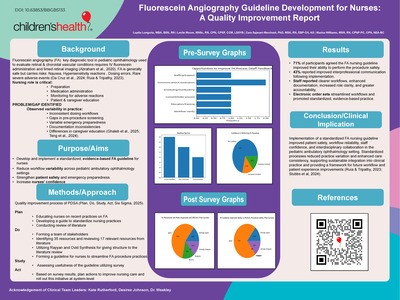
Fluorescein Angiography Guideline Development for Nurses: A Quality Improvement Report
Lupita Longoria,; Leslie Moore,; Zara Sajwani-Merchant,; and Marisa Williams
-
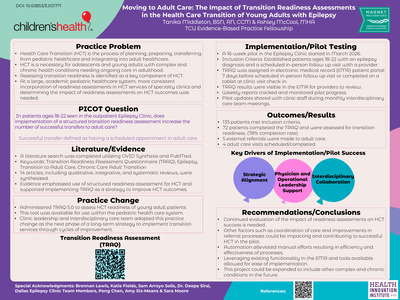
Moving to Adult Care - The Impact of Transition Readiness Assessments in the Health Care Transition of YAs with Epilepsy
Tanika Middleton and Ashley McCool
Lit Review: Using OVID Synthesis and PubMed, a comprehensive literature review of 14 articles was conducted to explore use, role, and outcomes of transition readiness assessments in epilepsy and other pediatric patient populations. Across literature, evidence supported implementation of the Transition Readiness Assessment Questionnaire (TRAQ). TRAQ is the third iteration of a validated tool used internationally to assess adolescent and young adult HCT readiness using 20 questions, 4 domains, plus 2 questions on confidence and importance in managing health care. PICO: In patients ages 18-22 seen in the outpatient Epilepsy Clinic, does implementation of a structured transition readiness assessment increase the number of successful transfers to adult care? Results: 133 patients met inclusion criteria. 72 TRAQs were completed, with a 78% completion rate. Five referrals to adult care were made and four referrals resulted in scheduled or completed visits in adult care.
-
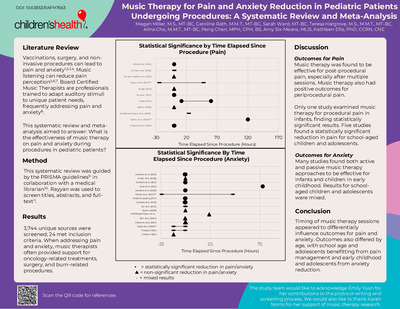
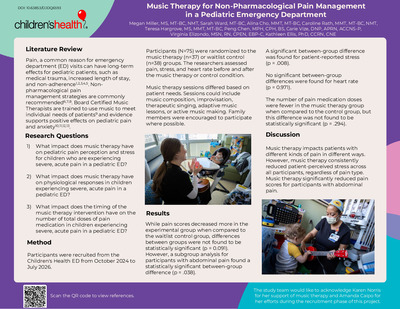
Music Therapy for Pain and Anxiety Reduction in Pediatric Patients Undergoing Procedures: A Systematic Review and Meta-Analysis
Megan Miller, Caroline Rath, Sarah Ward, Teresa Hargrove, Alina Cho, Peng Chen, Amy Six-Means, and Kathleen Ellis
Printing is not supported at the primary Gallery Thumbnail page. Please first navigate to a specific Image before printing.