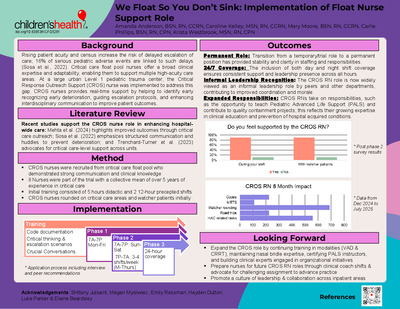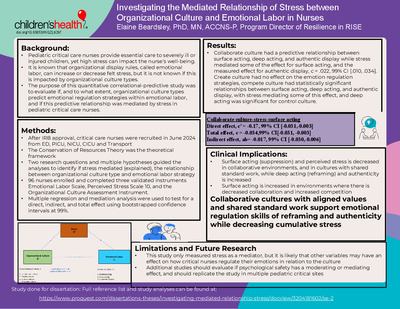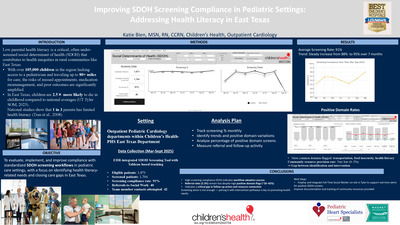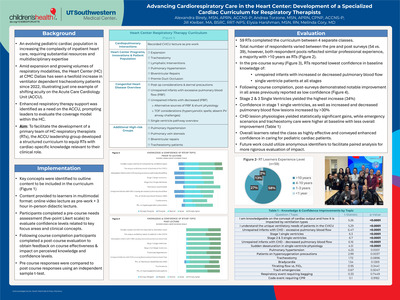
-
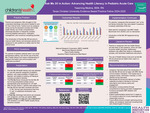
Ask Me 3® in Action: Advancing Health Literacy in Pediatric Acute Care
Yaseming Medina
EBP
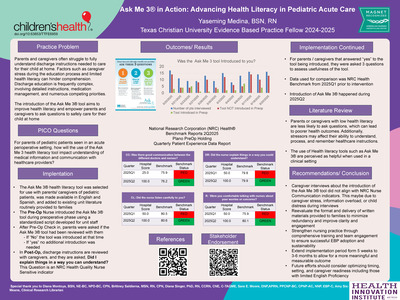
Literature Review: Parents and caregivers’ understanding of how to provide safe and effective care at home is vital. However, elevated levels of stress and limited health literacy face significant challenges in understanding discharge instructions. Patients who understand heath instructions make fewer mistakes when they take their medicine, follow treatment plans, and prepare for medical appointments. Patients have reported higher satisfaction and found that the use of Ask Me 3 was helpful in learning more about their medical condition.PICO: For parents of pediatric patients seen in an acute perioperative setting, how will the use of the Ask Me 3 health literacy tool impact understanding of medical information and communication with healthcare providers?
Evaluation: A multidisciplinary team provided the Ask Me 3 handout in Spanish and English preoperatively. Nurses Introduced the tool at check- in and reviewed it when teaching discharge instructions, assessing usefulness, and caregiver confidence in home care. Discharge instructions included asking, "Did I explain things in a way you can understand?" (an NRC Health Nurse Sensitive indicator). The use of Ask Me 3 was tracked, and NRC scores were compared across quarters. The tool improved patient experience, achieving 100% scores in Care Coordination, Listening, Education, Responsiveness, and Service Recovery in Q2 compared to the previous year. Overall, Ask Me 3 enhanced communication, clarity, and caregiver confidence. Future efforts will focus on team engagement, ongoing evaluation of Ask Me 3, and sustaining the tool.
-
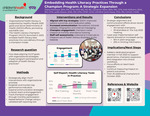
Embedding Health Literacy Practices Through a Champion Program: A Strategic Expansion
Diana Montoya, Cameron Stine, Kelli Williams, Leslie Moore, and Carol Howe
QUALITY IMPROVEMENT
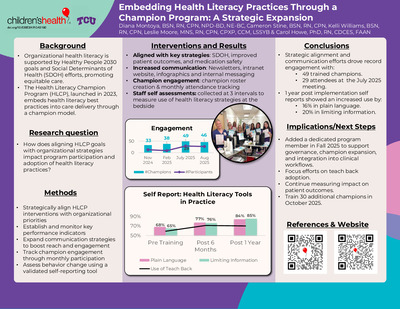
Background: The importance of becoming a Health-Literate Organization gained momentum in our pediatric organization, driven by the Healthy People 2030 initiative, Social Determinants of Health Screening and organizational strategies focused on enhancing patient outcomes. The Health Literacy Champion Program (HLCP) was expanded in 2024-2025 to embed subject matter experts into inpatient care units, thereby infusing health literacy best practices to enhance patient communication.Methodology: The initial phase involved aligning the HLCP interventions with organizational strategic priorities and establishing shared goals among stakeholders. The program leads identified key priority indicators and metrics to evaluate the program. The second phase focused on promoting metric outcomes more broadly using a multi-pronged communication approach among clinicians. HLCP champion engagement was tracked utilizing meeting attendance rosters, number of champions, and attrition rates. In addition, the champions shared perceptions and personal narratives to highlight the program’s impact on patient experiences. Lastly, the adoption of health literacy strategies was assessed through self-reported surveys at pre-, 6-months, and 1-year post-implementation of the HLCP.
Outcomes: Staff engagement outcomes showed a significant increase in the number of champions from 2024 to 2025 by 25 participants, a 19% attrition rate due to role change, and an increase in the average rate of monthly meeting attendance from 32% in 2024 to 52% in quarter 2 of 2025. This growth resulted in the development of the HLCP as a formal nursing professional governance forum in 2024. Overall, champions’ personal narratives highlighted how health literacy strategies positively impacted patient experiences. These narratives demonstrated the overall positive impact of implementing health literacy best practices and the importance of ingraining these practices into patient care delivery. To promote the dissemination of metric outcomes, an electronic quarterly newsletter was distributed in 2024 and 2025 and viewed on average by 2,010 team members. Self-reported survey showed a statistically significant increase in the application of two health literacy strategies from pre- to 1-year post.
-
Community Health Worker (CHW) Initiative to Address Low Acuity Pediatric Emergency Department Utilization
Jana Neal and Danielle Hayle
INNOVATION & LEADERSHIP
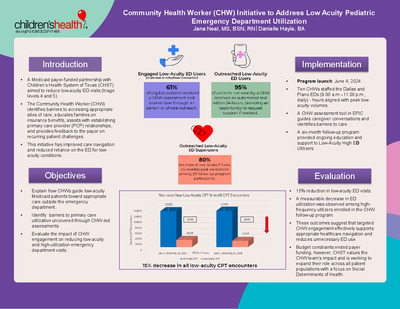
Background: A Medicaid payor-funded collaborative was initiated in partnership with Children’s Health System of Texas to reduce low-acuity emergency department (ED) visits—defined as triage levels 4 or 5—among Medicaid patients, who account for the largest share of ED use, with nearly 50% of visits considered low acuity. To address this, certified Community Health Workers (CHWs) were deployed in the Dallas and Plano EDs to engage eligible caregivers. CHWs provide education on insurance benefits, assist with establishing primary care provider (PCP) relationships, and promote appropriate healthcare utilization. They also work to identify barriers preventing the use of alternative care options (e.g., PCPs, urgent care) for non-emergent needs, while delivering feedback to the payor on recurring patient challenges. This initiative supports care navigation and aims to shift low-acuity care from the ED to more appropriate settings.Implementation: The initiative was launched on June 4, 2024. Based on historical ED visit data, 10 CHWs were hired to provide coverage at the Dallas and Plano EDs from 9:00 AM to 11:00 PM, seven days a week—aligned with peak hours for low-acuity visits. A customized assessment tool was built into Epic to guide CHWs through caregiver conversations, helping identify reasons for the ED visit and uncover barriers to appropriate care. Assessment findings are reported to the payor, who uses the data to inform and initiate changes at the PCP level. In addition to in-person assessments, CHWs conduct follow-up phone outreach to families who visit after hours. Patients identified as high ED utilizers (three or more low-acuity ED visits within 12 months) are enrolled in a follow-up program offering up to six months of continued education and support aimed at promoting consistent primary care and reducing avoidable ED use.
Evaluation: Early results show a significant reduction in low-acuity emergency department (ED) visits. Additionally, a measurable decrease in ED utilization was observed among high-frequency utilizers enrolled in the CHW follow-up program. These outcomes suggest that targeted CHW engagement effectively supports appropriate healthcare navigation and reduces unnecessary ED use. Initial funding for the initiative was provided through a grant, and based on these promising findings, the payor and Children’s Health System of Texas are actively discussing expanding the CHW role and extending the program for another year.
-
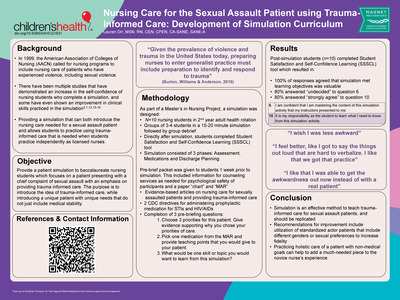
Nursing Care for the Sexual Assault Patient using Trauma-Informed Care: Development of Simulation Curriculum
Lauren Orr
INNOVATION & LEADERSHIP
Background: In 1999, the American Association of Colleges of Nursing (AACN) called for nursing programs to include nursing care of patients who have experienced violence, including sexual violence. The care of these vulnerable patients requires specialized care, but also the use of specialized language through using trauma-informed care (TIC) to prevent revictimization and to further support healing. A simulation curriculum was developed that can both introduce the nursing care needed for a sexual assault patient and allow students to practice using TIC that is used when students practice independently as licensed nurses. Multiple studies have supported an increase in the self-confidence of nursing students who complete a simulation, and some have even shown an improvement in clinical skills practiced in the simulation. This simulation addresses the need for education for patients experiencing violence and helps guide students in using TIC to support the holistic care that nurses provide.Implementation: A pilot simulation was implemented using 10 nursing students in their 2nd year adult health rotation. Groups of 3-4 students spent 15-20 minutes in the simulation and completed with group debrief. Directly after the simulation, students completed the Satisfaction and Self-Confidence Learning (SSSCL) tool. A pre-brief packet was given to students 1 week prior to simulation. This included information for counseling services as needed for psychological safety of participants, a paper “chart” and “MAR”, and articles on nursing care for sexual assault patients and providing TIC. In addition, 3 pre-briefing questions were completed and handed in to the facilitator the day of the simulation. The goal of this pilot was to provide the groundwork to implement this simulation in other nursing school programs and potentially branch out to new graduate nurse programs. This simulation could easily be changed to include different patient presentations, such as different genders or age.
Evaluation: Post-simulation, students completed the SSSCL tool which resulted in 100% of participants agreeing that the simulation was helpful and effective and that the teaching materials used were motivating and helped them learn (questions 1-5). A majority of participants (8) answered “strongly agree” to question 10 (It is my responsibility as the student to learn what I need to know from this simulation activity), and through the group debrief there was an overwhelming theme of participants enjoying that they got to practice hard to discuss topics or, as one participant reported, “I like that I was able to get the awkwardness out now instead of with a real patient”.
-
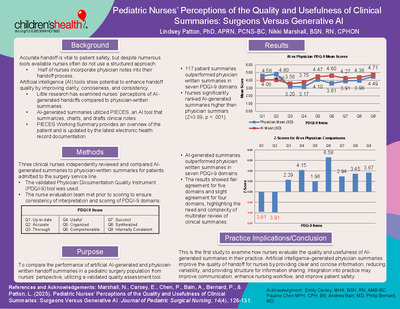
Pediatric Nurses’ Perceptions of the Quality and Usefulness of Clinical Summaries: Surgeons Versus Generative AI
Lindsey Patton and Nikki Marshall
RESEARCH
Purpose: The purpose of this study was to compare the performance of AI-generated summaries and physician-written summaries in the pediatric surgery population from nurses’ perspectives.Methods: The study occurred at a large, academic-affiliated pediatric healthcare system designated as a Level 1 Children’s Surgery Center. Three clinical nurses independently reviewed and compared AI-generated summaries to physician written summaries for patients admitted to the surgery service line utilizing the validated Physician Documentation Quality Instrument (PDQI-9) tool. The nurse evaluation team met prior to scoring to ensure consistency of interpretation and scoring of PDQI-9 domains.
Results: AI-generated and physician written summaries for 117 patients were included, revealing a statistically significant higher ranking for AI-generated summaries (Z = 3.89, p < .001). AI-generated summaries outperformed physician written summaries in seven out of nine PDQI-9 domains (thorough, useful, organized, comprehensible, succinct, synthesized, and internally consistent). Fleiss’ Kappa analysis was conducted to assess the degree of agreement among the raters, showing fair agreement for five domains, and slight agreement for four domains, highlighting the need and complexity of multi-rater review of clinical summaries.
-
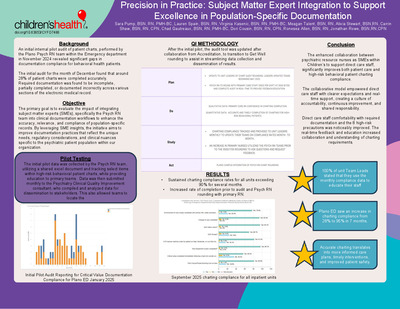
Precision in Practice: Subject Matter Expert Integration to Support Excellence in Population-Specific Documentation
Sara Pump, Lauren Spain, Virginia Kasenic, Meagan Talent, Alivia Stewart, Carrin Shaw, Chad Gautreaux, Dori Cousin, Ronesea Allen, and Jonathan Rowe
QUALITY IMPROVEMENT
Background: An initial internal pilot audit of patient charts, performed by the Plano psych RN team within the Emergency department in November 2024 revealed significant gaps in documentation compliance for behavioral health patients. Many areas of required charting were found to be incomplete, partially completed, or inconsistently documented across disparate sections of the electronic medical record. This fragmentation not only impedes the ability to efficiently locate critical information but also fails to meet the documentation standards outlined in Children’s Health organizational policies. These deficiencies pose risks to continuity of care, clinical decision-making, regulatory compliance, patient and staff safety, ultimately underscoring the need for a targeted quality improvement initiative to enhance documentation practices and ensure alignment with institutional requirements.Methodology: Methodology: The initial pilot audit was conducted using a standardized Excel spreadsheet to track the completion and compliance of required documentation across behavioral health patient charts by the Psych RN team. Data was submitted monthly from the Psych RN team to the Psychiatry Clinical Quality Improvement Consultant, who compiled and analyzed findings for dissemination to relevant stakeholders. Following the pilot phase, a streamlined data collection tool was developed in collaboration with accreditation partners using the GetWell Rounding platform. The new survey format facilitated real-time feedback and supported targeted interventions to address documentation gaps and reinforce compliance with organizational standards. In addition to the new rounding format, the Psychiatric RN team implemented in-person chart audits in collaboration with direct care staff to assist in an increase in charting compliance.
Outcomes: Following the implementation of the GetWell Rounding survey, charting compliance improved significantly—from an initial baseline of 28% to sustained rates exceeding 90% over several consecutive months. Department and unit leaders reported that the enhanced data collection process was instrumental in identifying targeted opportunities for staff education and workflow improvement. Additionally, primary staff demonstrated increased completion of behavioral health documentation prior to Psychiatric RN intervention, reflecting greater awareness and understanding of required charting standards. This proactive engagement contributed to a more consistent and compliant documentation culture across both Emergency Room and Inpatient settings.
-
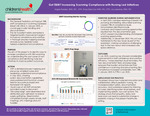
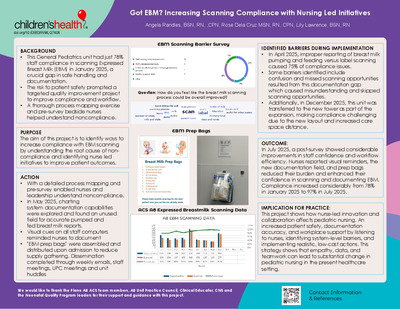
Got EBM? Increasing Scanning Compliance with Nursing Led Initiatives
Angela Randles, Rose Dela Cruz, and Lily Lawrence
QUALITY IMPROVEMENT
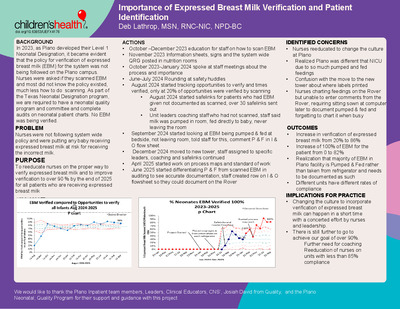
Background: This General Pediatrics unit had just 78% staff compliance in scanning Expressed Breast Milk (EBM) in January 2025, a crucial gap in safe handling and documentation. The risk to patient safety prompted a targeted quality improvement project to improve compliance and workflow. A thorough process mapping exercise and pre-survey bedside nurses helped understand noncompliance. The aim of this project is to identify ways to increase compliance with EBM scanning by understanding the root cause of non-compliance and identifying nurse led initiatives to improve patient outcomes.Methodology: In April 2025, improper reporting of breast milk pumping and feeding versus label scanning caused 75% of compliance issues. With a detailed process mapping and pre-survey enabled nurses and leadership understand noncompliance. Som barrier identified include confusion and missed scanning opportunities resulted from this documentation gap which caused misunderstanding and skipped scanning opportunities. Additionally, in December 2025, this unit was transferred to the new tower as part of the expansion, making compliance challenging due to the new layout and increased care space distance. In May 2025, charting system documentation capabilities were explored and found an unused field for accurate pumped and fed breast milk reports. Visual cues on all staff computers reminded nurses to document, "EBM prep bags" were assembled and distributed upon admission to reduce supply gathering. Dissemination completed through weekly emails, staff meetings, UPC meetings and unit huddles.
Outcomes: In July 2025, a post-survey showed considerable improvements in staff confidence and workflow efficiency. Nurses reported visual reminders, the new documentation field, and prep bags reduced their burden and enhanced their confidence in scanning and documenting EBM. Compliance increased considerably from 78% in January 2025 to 97% in July 2025. This project shows how nurse-led innovation and collaboration affects pediatric nursing. An increased patient safety, documentation accuracy, and workplace support by listening to nurses, identifying system-level barriers, and implementing realistic, low-cost actions. This strategy shows that empathy, data, and teamwork can lead to substantial change in pediatric nursing in the present healthcare setting.
-
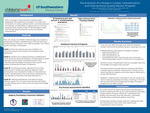
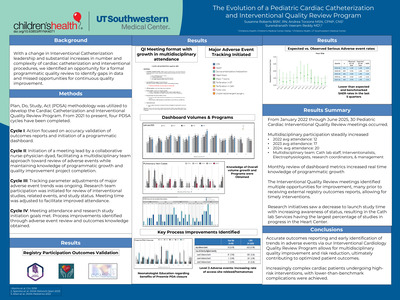
The Evolution of a Pediatric Cardiac Catheterization and Interventional Quality Review Program
Susanne Roberts, Andrea Torzone, and Surendranath Veeram Reddy
QUALITY IMPROVEMENT
Background: With a change in leadership, substantial increases in the number and complexity of cardiac catheterization and interventional procedures, we identified an opportunity for a formal programmatic quality review to identify potential gaps in data and missed opportunities for quality improvement.Methodology: Plan, Do, Study, Act (PDSA) methodology was utilized to develop the Cardiac Catheterization and Interventional Quality Review Program. Over the course of 2021 to present, four cycles of the PDSA process have been completed. Cycle I: Action focused on accuracy validation of outcomes reports and initiation of a programmatic dashboard. Cycle II: Initiation of a meeting lead by a collaborative nurse-physician dyad, to facilitate a multidisciplinary team approach toward review of adverse events while maintaining knowledge of programmatic growth and quality improvement project completion. Cycle III: Tracking parameter adjustments of major adverse event trends and research team participation initiated for review of interventional studies, related events, and study status. Meeting time adjusted to facilitate improved attendance. Cycle IV: Meeting attendance and research study initiations goals met. Process improvements identified through adverse event review and outcomes knowledge obtained.
Outcomes: From 2021 through present, 30 Pediatric Cardiac Interventional Quality Review meetings occurred. Multidisciplinary participation steadily increased (2022:12/13 people average, 2023:17 people average, 2024:20 people average). The Multidisciplinary team is comprised of Cath lab staff, Interventionalists, Electrophysiologists, research coordinators, & management personnel. The Interventional Quality Review meetings identified multiple opportunities for improvement. Key process improvements include Preemie Duct Occlusion Program, Adverse Event trend monitoring, and Research in Interventional Cardiology. Accurate outcomes reporting and early identification of trends in adverse events via our Interventional Cardiology Quality Review Program allows for multidisciplinary quality improvement and risk reduction, ultimately contributing to optimized patient outcomes. Increasingly complex cardiac patients, undergoing high-risk interventions with lower-than-benchmark complications was achieved.
-
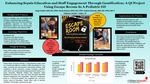
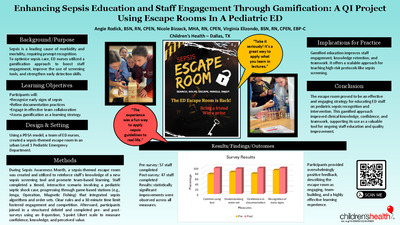
Enhancing Sepsis Education and Staff Engagement Through Gamification: A QI Project Using Escape Rooms In A Pediatric ED
Angie Rodick, Nicole Bizzack, and Virginia Elizondo
QUALITY IMPROVEMENT
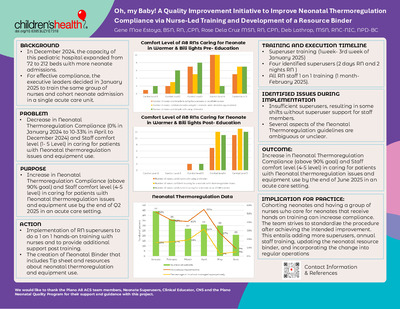
Background: Sepsis is a leading cause of morbidity and mortality in hospitals, making early recognition and intervention critical. Traditional education methods often fail to ensure retention of essential knowledge, leaving staff underprepared. To address this gap, a Quality Improvement (QI) project was launched in the Emergency Department (ED) of an urban Level 1 Pediatric Trauma Center. Nursing leaders identified the need for engaging, sustainable education and collaborated with educators to design an escape room training activity. The aim was to evaluate whether gamification could increase engagement, improve understanding of a new sepsis screening tool, and enhance overall sepsis awareness among ED staff.Methodology: Using the plan-do-study-act (PDSA) framework, an interactive escape room was developed during Sepsis Awareness Month. Staff teams worked through a septic shock case within a 30-minute time limit, advancing by solving puzzles at stations featuring games such as Jenga, Operation, and a Magnetic Fishing Game. Each challenge reinforced use of sepsis algorithms, order sets, and clinical pathways. Rules and objectives were clearly defined, and a competitive element, a prize for the fastest team, encouraged motivation. After completing the escape room, participants engaged in structured debriefings to consolidate learning and provide feedback. To measure effectiveness, staff completed pre- and post-evaluations using an eight-question, five-point Likert-type scale, assessing knowledge, confidence, and application of the sepsis tool and guidelines.
Outcomes: Fifty-seven participants completed the pre-survey, and 47 completed the post-survey. Results showed statistically significant improvements in multiple domains. Comfort using the new sepsis tool increased from 75% to 98% (p = 0.001), understanding of the order set rose from 83% to 96% (p = 0.018), confidence in documentation improved from 77% to 98% (p = 0.001), and recognition of early sepsis signs increased from 90% to 98% (p = 0.044). Participant feedback was overwhelmingly positive, with comments highlighting enjoyment, teamwork, and practical application of knowledge. Overall, the escape room format enhanced engagement, promoted collaboration, and supported long-term knowledge retention, demonstrating its value as an innovative educational tool in clinical practice.
-
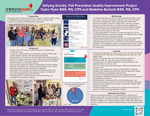
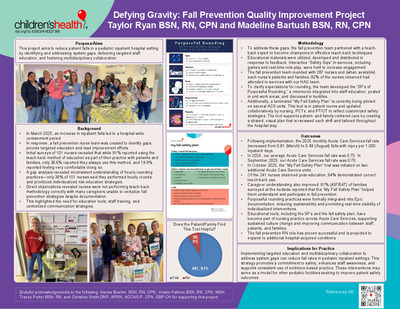
Defying Gravity: Fall Prevention Quality Improvement Project
Taylor Ryan and Madeline Bartush
QUALITY IMPROVEMENT
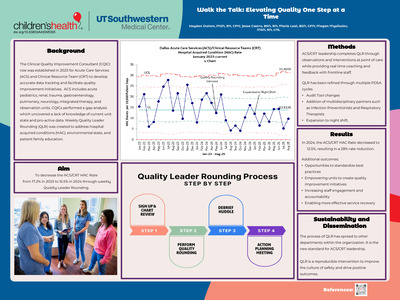
Background: In March of 2025, an increase in inpatient falls led to a hospital-wide containment period. In response, a fall prevention nurse role was created to identify gaps, provide targeted education and lead improvement efforts. Initial surveys of 101 nurses revealed that while 91% reported using the teach-back method of education as part of their practice with patients and families, only 36.6% reported they always use this method, and just 19.8% reported feeling very comfortable doing so. Direct observations revealed families unable to teach-back fall prevention strategies despite nurse documentation of education completion. A gap analysis also revealed inconsistent understanding of hourly rounding practices—39% of 101 nurses said they performed hourly rounding and prioritized individualized risk education strategies. This highlighted the need for education tools, staff training, and centralized communication strategies.Methodology: To address these gaps, the fall prevention team partnered with a teach-back expert to become champions. Educational materials were utilized, developed and distributed in response to feedback. Interactive “Safety Sips” in-services, including games and real-time role-play, were held to increase engagement. Of 287 nurses surveyed, 79% attended in-services, and 94% of the 241 observed afterward demonstrated correct use of teach-back. To clarify expectations for rounding, the team developed the “5P’s of Purposeful Rounding,” a mnemonic integrated into staff education, posted in unit work areas, and discussed in huddles. Additionally, a laminated “My Fall Safety Plan” is currently being piloted on several units. This tool is in patient rooms and updated collaboratively by nursing, PCTs, and PT/OT to reflect customized safety strategies. The tool supports patient- and family-centered care by creating a shared, visual plan that is reviewed each shift and updated throughout the hospital stay.
Outcomes: Throughout implementation on various ACS units, the monthly hospital-wide fall with injury rate per 1,000 inpatient days decreased from 0.62 (March) to 0.32 (August). Of the 241 nurses observed post- implementation, 94% demonstrated correct teach-back use. Caregiver understanding also improved: 91% (159/175) of families surveyed at the bedside reported that the “My Fall Safety Plan” helped them understand and participate in fall prevention. Purposeful rounding practices were formally integrated into Epic documentation, ensuring sustainability and promoting real-time visibility of individualized interventions. The fall prevention RN role has proven successful and is projected to expand to additional hospital-acquired conditions. Educational tools, including the 5P’s and the fall safety plan, have become part of nursing practice across Acute Care Services, supporting sustained culture change and improving communication between staff, patients, and families.
-
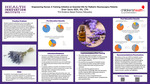
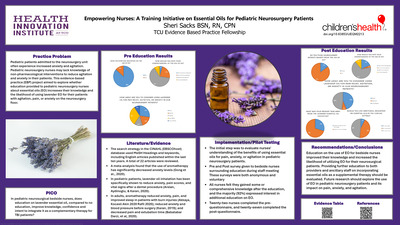
Empowering Nurses: A Training Initiative on Essential Oils for Pediatric Neurosurgery Patients
Sheri Sacks
EBP
Literature Review: Pediatric neurosurgery patients often face increased anxiety and agitation. Nurses may lack knowledge of non-pharmacological interventions to reduce agitation and anxiety in their patients. Literature review used MeSH Headings and keywords to find recent English articles. Evidence shows EO reduces anxiety. Lavender inhalation lowers anxiety, pain, and vital signs in pediatric dental patients. In adults, aromatherapy decreases anxiety, pain, blood pressure, and improves sleep, also reducing pain and extubation time.PICO: In pediatric neurosurgical bedside nurses, does education on lavender essential oil, compared to no education, improve knowledge, confidence and intent to integrate it as a complementary therapy for TBI patients?
Evaluation: Nurses' knowledge of EO benefits was evaluated, and education was provided in staff meetings. Twenty-two nurses completed the pre-questionnaire and twenty-seven the post-questionnaire. In the pretest, 73% of nurses had experience using EO, compared to 59% in the posttest. EO use was mainly seasonal. Most nurses (86%) had never received EO education in the pretest, compared to 59% in the posttest. In the pretest, 87% rated their understanding of EO as slightly or not at all knowledgeable, decreasing to 71% in the posttest. Only 59% were likely or very likely to consider lavender EO for pain, agitation, or anxiety in neurosurgery patients in the pretest, compared to 92% in the posttest. Before education, 59% believed neurosurgery patients could benefit from EO, increasing to 85% after. All felt they gained some or comprehensive knowledge, and 92% wanted more EO education. EO education boosted nurses' knowledge and willingness to use EO with pediatric neurosurgery patients.
-
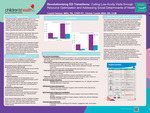
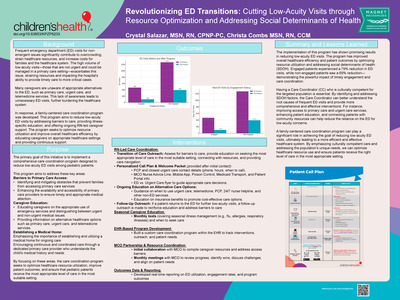
Revolutionizing ED Transitions: Cutting Low-Acuity Visits through Resource Optimization and Addressing Social Determinants of Health
Crystal Salazar and Christa Combs
INNOVATION & LEADERSHIP
Background: Frequent emergency department (ED) visits for non-emergent issues contribute to overcrowding, strain healthcare resources, and raise costs for families and the system. Many of these low-acuity visits—non-urgent cases manageable in primary care—worsen ED congestion and delay care for critical patients. A major factor is caregivers’ lack of awareness about alternatives like primary care, urgent care, and telemedicine. This leads to unnecessary ED use and further system strain. To address this, a family-centered care coordination program was created to reduce low-acuity ED visits by tackling care barriers, offering illness-specific education, and providing ongoing RN-led caregiver support. The program aims to improve healthcare efficiency by guiding caregivers to appropriate care settings and offering continuous support.Implementation: The program is led by registered nurses who conduct transition-of-care outreach to assess barriers, educate caregivers on appropriate care settings, and provide support. Following initial contact, families receive a personalized call plan and welcome packet with key resources, including PCP and urgent care contact details, nurse advice line, mobile app, poison control, Medicaid transport, and patient portal access. An ED vs. urgent care flyer supports informed decision-making. Ongoing education emphasizes when to use urgent care, telemedicine, PCPs, and 24/7 nurse helplines, along with insurance benefit guidance to encourage cost-effective choices. Follow-up outreach is initiated for repeat low-acuity ED visits to reinforce education and address unresolved barriers.
Evaluation: Program implementation demonstrated strong outcomes in reducing low-acuity ED utilization. Engaged patients experienced a 79% reduction in ED visits, while non-engaged patients saw a 69% reduction, highlighting the impact of timely engagement and RN-led care coordination. The program improved healthcare efficiency by optimizing resource use and addressing social determinants of health (SDOH). Culturally competent care coordinators played a critical role in identifying root causes of ED overuse and tailoring interventions to meet the needs of diverse populations. Strategies such as improving access to primary and urgent care, enhancing caregiver education, and connecting families with community resources contributed to sustained reductions in ED reliance. These findings support the value of family-centered care coordination in promoting appropriate care utilization and advancing health equity.
-
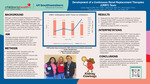
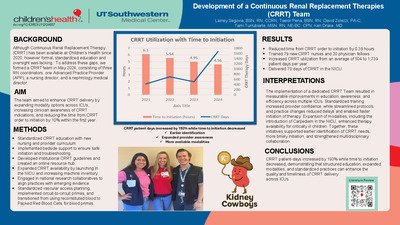
Development of a Continuous Renal Replacement Therapies (CRRT) Team
Lainey Segovia, Taelor Pena, David Zolezzi, Tami Turrubiarte, and Keri Drake
INNOVATION & LEADERSHIP
Background: Our organization identified an opportunity to provide Continuous Renal Replacement therapy (CRRT) to more patients while simultaneously reducing time to initiation by building a dedicated CRRT team. Although CRRT has been provided for years, it lacked formal standardized education and oversight.Implementation: Recognizing these gaps in care we formed a CRRT team in May 2024, consisting of three RN coordinators, one Advanced Practice Provider (APP), a nursing director, and a nephrology medical director. The aim was to improve CRRT delivery by authoring guidelines, providing formal in-person education for nurses and providers, creating a centralized resource hub, and contributing to research through data collection. Initial assessments revealed gaps in education, standardization and resource availability. The team developed curriculum, wrote competencies, taught classes, authored guidelines, developed and disseminated patient education and provided bedside support.
Evaluation: Since its inception the team has trained 79 nurses and 14 physician fellows. CRRT patient days increased from 504 to 1673 a 193% in the first year of the program. The average time from order to initiation showed a slight decrease from an average of 5.17 hours to 5.04 hours. Through this work, we identified key contributors to initiation delays, including IV access challenges, pre-prime procedures, and the use of reconstituted blood for circuit priming. To address this, we plan to trial eliminating pre-prime and using PRBCs alone to further reduce initiation time. The development of a structured, collaborative CRRT team has been successful in standardizing, enhancing and expanding CRRT care delivery for critically ill pediatric patients.
-
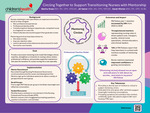
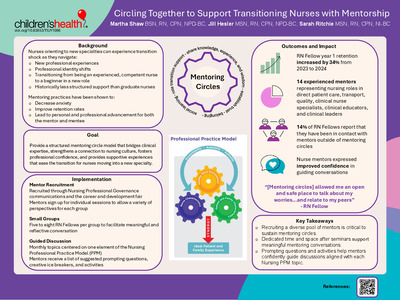
Circling Together to Support Transitioning Nurses with Mentorship
Martha Shaw, Jill Hesler, and Sarah Ritchie
QUALITY IMPROVEMENT
Background: Nurses orientating to new environments can experience transition shock as they navigate new professional experiences, challenges, and identities. While much attention is given to supporting new graduate nurses, experienced nurses changing specialties frequently receive less structured support, despite facing unique challenges. Experienced nurses enter their new roles with a level of competence and expertise from a previous specialty, only to find themselves functioning as beginners in a new practice setting. Mentoring practices have been shown to increase confidence, decrease anxiety, and improve rates of retention and growth behaviors over the course of a career leading to personal and professional advancement for both the mentor and mentee.Methodology: Nurses with more than 12 months of clinical, bedside care experience, who are new to pediatrics or changing specialties within pediatrics, participate in a six month long RN Fellowship program. After monthly in person seminars, Fellows participate in mentoring circles with experienced mentors. Mentors are recruited through Nursing Professional Governance communications, career and development fairs, and through identified department mentor coordinators. Two years of clinical experience are required to be a mentor in the RN Fellowship program. Circle groups are small, with five to eight RN Fellows, to facilitate reflective conversation. Each month’s topic is centered around a different element of the organization’s Nursing Professional Practice Model. A list of suggested prompting questions, creative ice breakers, and conversation activities is provided to the mentor. Surveys are presented at three and six months to RN Fellows to determine effectiveness of mentoring and the program.
Outcomes: Since the launch of the RN Fellowship program, fourteen experienced mentors have participated representing nursing roles in direct patient care, transport, quality, clinical nurse specialists, clinical educators, and clinical leaders. Nurse mentors have expressed improved confidence in guiding conversations with the addition of the activities along with prompting questions. 14% of RN Fellows report that they have been in contact with mentors outside of mentoring circles, strengthening connections to the nursing culture. The first year RN Fellow retention rate increased by 34% from 2023 to 2024. One RN Fellow commented “[Mentoring circles] allowed me an open and safe place to talk about my worries and…relate to my peers,” highlighting the impact that mentoring circles have on nurses transitioning specialties. The inclusion of structured mentoring circles benefits nurses transitioning into new specialties, as well as equips individuals seeking to grow in mentoring peers and colleagues.
-
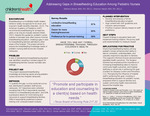
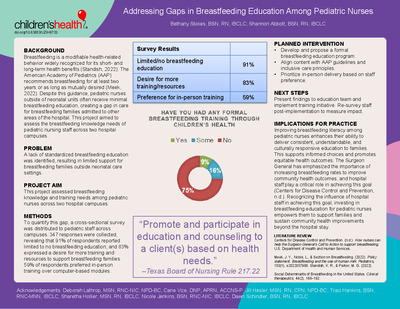
Addressing Gaps in Breastfeeding Education Among Pediatric Nurses
Bethany Stokes and Shannon Abbott
INNOVATION & LEADERSHIP
Background: Breastfeeding is a modifiable health-related behavior widely recognized for its short-and long-term health benefits (Standish, 2022). The American Academy of Pediatrics (AAP) recommends breastfeeding for at least two years or as long as mutually desired (Meek, 2022). Despite this guidance, pediatric nurses outside of neonatal units often receive minimal breastfeeding education, creating a gap in care for breastfeeding families admitted to other areas of the hospital. This project aimed to assess the breastfeeding knowledge needs of pediatric nursing staff across two hospital campuses. A lack of standardized breastfeeding education was identified. To quantify this gap, a cross-sectional survey was distributed to pediatric staff across campuses. 347 responses were collected, revealing that 91% of respondents reported limited to no breastfeeding education, and 83% expressed a desire for more training and resources to support breastfeeding families.Implementation: 59% of respondence preferred in-person training over computer-based modules. Using this data, we plan to present a breastfeeding initiative and instructional strategy to our education team to advocate for a formalized program. Following implementation, we will re-survey both campuses to evaluate the impact of the education.
Evaluation: Importantly, this initiative also seeks to address social determinants of health (SDOH) by recognizing that breastfeeding support is not equally accessible to all families (Standish, 2022). Access to culturally competent care can influence breastfeeding outcomes. By equipping nurses with inclusive, evidence-based education, we aim to reduce disparities and promote equitable breastfeeding support across diverse patient populations. The Surgeon General has emphasized the importance of increasing breastfeeding rates to improve community health outcomes, and hospital staff play a critical role in achieving this goal (Centers for Disease Control and Prevention, n.d.). Recognizing the influence of hospital staff in achieving this goal, investing in breastfeeding education for pediatric nurses empowers them to support families and sustain community health improvements long after discharge.
-
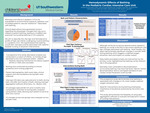
Hemodynamic Effects of Bathing in the Pediatric Cardiac Intensive Care Unit
Andrea Torzone; Kuroush , Nezafati; Donghan Yang; Yang Xie; Julia Gerstmann; Joshua Wolovits; and Javier J. Lasa
RESEARCH
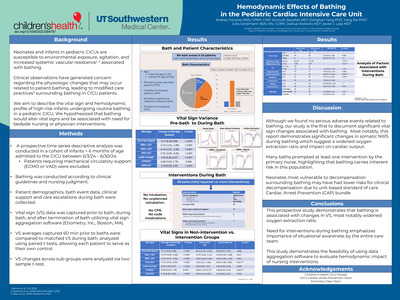
Purpose: Neonates and infants in a pediatric cardiac intensive care unit (CICU) are particularly susceptible to hemodynamic consequences of environmental exposure, agitation, and increased systemic vascular resistance associated with bathing. Clinical observations have generated significant debate regarding the physiologic changes that may occur related to patient bathing, leading to modified care practices surrounding routine bathing in the CICU. Due to the paucity of evidence surrounding physiologic changes associated with bathing in the CICU, we aim to describe the vital sign and hemodynamic profile of this high risk neonatal and infant population undergoing routine bathing in a pediatric CICU.Methods: A prospective time series descriptive analysis of infants < 6 months of age admitted to the CICU at a quaternary care children’s hospital was performed by capturing vital signs from baseline (pre-bath) to time points during bath and after termination of bathing utilizing the T3 platform (Etiometry, Inc., Boston, MA). Demographics, bath event data, interventions in place at time of bath, and care escalations during bath were captured. Descriptive statistics were used to describe baseline patient and bath event level characteristics. Vital sign averages during pre/intra/post bath periods are reported and are compared with matched vital signs during bath and during the 60 min after bath ends to determine magnitude and direction of variance. Paired t tests were utilized to ensure that each patient serves as his or her own control. We compared VS changes between those needing interventions vs none.
Results: Twenty-two patients underwent 164 bath events over 4 weeks. Median age at each bath was 53 [11-155] days and median duration was 12 min [IQR 9-17 min]. Majority of baths occurred post-operatively (67%, n=110), in the evening (4PM - 11PM, 70%, n=115), and via non-immersion water/soap technique (58% n=96). Only 35% (n=57) of baths were in mechanically ventilated patients and 24% (n=39) were in single ventricle patients. No cardiac arrests were observed although bedside care escalations occurred in 38% (n=66) of events. Significant increases in HR (8.17 ± 1.81), mABP (4.91 mmHg ± 1.46 mmHg; p< 0.001 for all values) and lower POx (-1.72% ± 0.79%) and cerebral and renal NIRS values (-3.12% ± 1.12% and -4.14% ± 1.23%, respectively; P< 0.001 for all values) were observed. Lastly, renal oxygen extraction ratio (rO2ER) widened during bathing events (2.18%, P< 0.001).
-
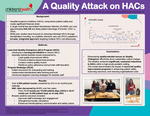
A Quality Attack on HACs
Chasity Tyree-Lee, Krystan Smith, William Gaines, Samantha Frederick, and Kendel Richards
QUALITY IMPROVEMENT
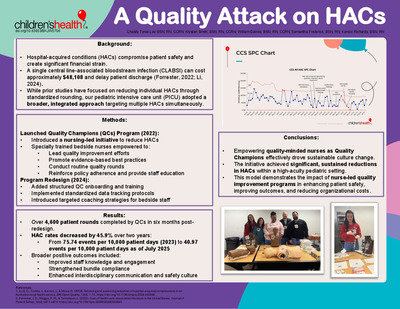
Background: Hospital-acquired conditions (HACs) pose a dual challenge to pediatric organizations, compromising patient safety while creating substantial financial burdens, with a single central line-associated bloodstream infection (CLABSI) costing an estimated $48,108 and delaying discharge (Forrester, 2022; Li, 2024). While prior studies have focused on reducing individual HACs through standardized rounding, our pediatric intensive care unit (PICU) adopted a broader, integrated approach.Methodology: In 2022, we launched a nursing-led initiative to reduce multiple HACs—catheter-associated urinary tract infections (CAUTI), CLABSI, hospital-acquired pressure injuries (HAPI), and peripheral intravenous catheter infiltration and extravasations (PIVIE)—simultaneously. The program empowered Quality Champions (QCs), specially trained bedside nurses, to promote evidence-based practices, reinforce policy adherence, and conduct routine quality-focused rounds. A 2024 program redesign introduced structured QC onboarding, standardized data tracking, and targeted coaching strategies for frontline staff.
Outcomes: During the six months following redesign, QCs conducted more than 4,600 patient rounds, enabling early intervention and enhancing compliance with safety bundles. Since program inception, the PICU has achieved a 45.9% reduction in HACs over two years, with rates declining from 75.74 events per 10,000 patient days in 2023 to 40.97 in 2025. Additionally, the initiative fostered broader improvements in staff knowledge, bundle compliance, and interdisciplinary communication. Leveraging quality-minded nurses as QCs proved effective in driving culture change and achieving sustained reductions in HACs within a high-acuity pediatric setting. This model demonstrates the potential of nurse-led quality improvement programs to simultaneously improve patient outcomes and reduce organizational costs.
-
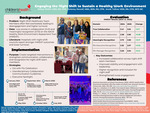
Engaging the Night Shift to Sustain a Healthy Work Environment
Kelsey Walsh, Delaney Dewolf, and Annie Tolliver
INNOVATION & LEADERSHIP
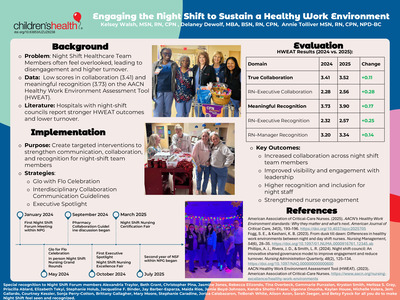
Background: Night shift nurses often feel overlooked, leading to disengagement and higher turnover. The common question, “What about for the night shift?” highlights gaps in recognition, communication, and collaboration. In 2024, a large pediatric health system launched a Night Shift Forum (NSF) to improve the work environment for this critical group. Results from the AACN Healthy Work Environment Assessment Tool (HWEAT) showed true collaboration (3.41) and meaningful recognition (3.73) as the lowest-scoring areas. Recent studies show that night-shift nurses consistently report lower scores on healthy work environment domains, while organizations with dedicated night councils demonstrate stronger staffing outcomes and lower turnover.Implementation: NSF interventions were designed around the realities of night-shift practice. Communication guidelines addressed interdepartmental collaboration during overnight hours. An “Executive Spotlight” connected senior leaders directly with night staff, increasing visibility and dialogue. Meaningful recognition was emphasized through initiatives like the “Glo with Flo” Nurses Week celebration, held in the middle of the night so night staff could fully participate. Forum members volunteered at events, elevated concerns, and collaborated with respiratory therapy, pharmacy, and other disciplines to address barriers. These strategies directly targeted the lowest-scoring HWE domains while fostering cultural change and stronger connections across shifts.
Evaluation: The HWEAT was re-administered in 2025 and demonstrated measurable gains. True collaboration improved from 3.41 to 3.52, with RN–executive collaboration rising from 2.28 to 2.56. Meaningful recognition increased from 3.73 to 3.90, including advances in RN–executive recognition (2.322.57) and RN–manager recognition (3.203.34). Appropriate staffing, a well-documented night-shift challenge, also improved significantly (4.474.68, p=0.026). These results show that targeted leadership strategies can strengthen engagement, recognition, and collaboration for night shift nurses. For pediatric nursing, improvements in the work environment translate into stronger staff engagement, safer care, and better patient and family experiences.
-
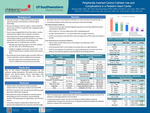
Peripherally Inserted Central Catheter Use and Complications in a Pediatric Heart Center
Melanie Walsh, Alexandra Birely, Lynn Clark, Jared Young, David Lee, and Sonali S. Patel
RESEARCH
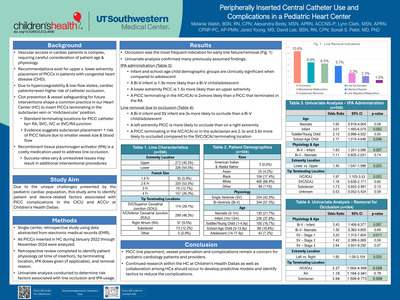
Purpose: To identify patient and device-related factors associated with PICC complications in the CICU and ACCU at Children's Health DallasMethods: - Single center, retrospective study using data abstracted from electronic medical records (EMR). - All PICCs inserted in HC during January 2022 through November 2024 were analyzed. - Retrospective review completed to identify patient physiology (at time of insertion), tip terminating location, tPA doses given (if applicable), and removal reason. - Univariate analysis conducted to determine risk factors associated with line occlusion and tPA usage.
Results: - Occlusion was the most frequent indication for early line failure/removal - Univariate analysis confirmed many previously assumed findings. tPA administration (Table 3): -Infant and school-age child demographic groups are clinically significant when compared to adolescent - A Bi-V infant is 1.9x more likely than a Bi-V child/adolescent - A lower extremity PICC is 1.5x more likely than an upper extremity - A PICC terminating in the IVC/ICAJ is 2xmore likely than a PICC that terminates in the RA Line removal due to occlusion (Table 4): - A Bi-V infant and SV infant are 3x more likely to occlude than a Bi-V child/adolescent - A left extremity PICC is more likely to occlude than on a right extremity - A PICC terminating in the IVC/ICAJ or in the subclavian are 2.3x and 3.6x more likely to occluded compared to the SVC/SCAJ terminating location Continued research within the HC at Children’s Health Dallas as well as collaboration among HCs should occur to develop predictive model.
-
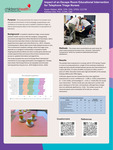
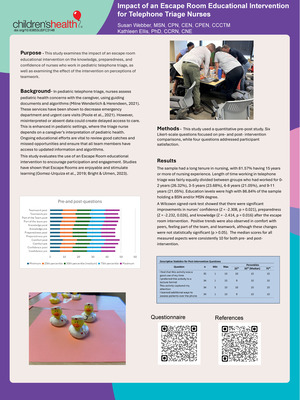
Impact of an Escape Room Educational Intervention for Telephone Triage Nurses
Susan Webber and Kathleen Ellis
RESEARCH
Purpose: This study examines the impact of an escape room educational intervention on the knowledge, preparedness, and confidence of nurses who work in pediatric telephone triage, as well as examining the effect of the intervention on perceptions of teamwork.Methods: This study used a quantitative pre-post study. Six Likert-scale questions focused on pre- and post- intervention comparisons, while four questions addressed participant satisfaction.
Results: The sample had a long tenure in nursing, with 81.57% having 15 years or more of nursing experience. Length of time working in telephone triage was fairly equally divided between groups who had worked for 0-2 years (26.32%), 3-5 years (23.68%), 6-8 years (21.05%), and 9-11 years (21.05%). Education levels were high with 86.84% of the sample holding a BSN and/or MSN degree. A Wilcoxon signed-rank test showed that there were significant improvements in nurses’ confidence (Z = -2.308, p = 0.021), preparedness (Z = -2.232, 0.026), and knowledge (Z = -2.414, p = 0.016) after the escape room intervention. Positive trends were also observed in comfort with peers, feeling part of the team, and teamwork, although these changes were not statistically significant (p > 0.05). The median scores for all measured aspects were consistently 10 for both pre- and post-intervention
Printing is not supported at the primary Gallery Thumbnail page. Please first navigate to a specific Image before printing.